
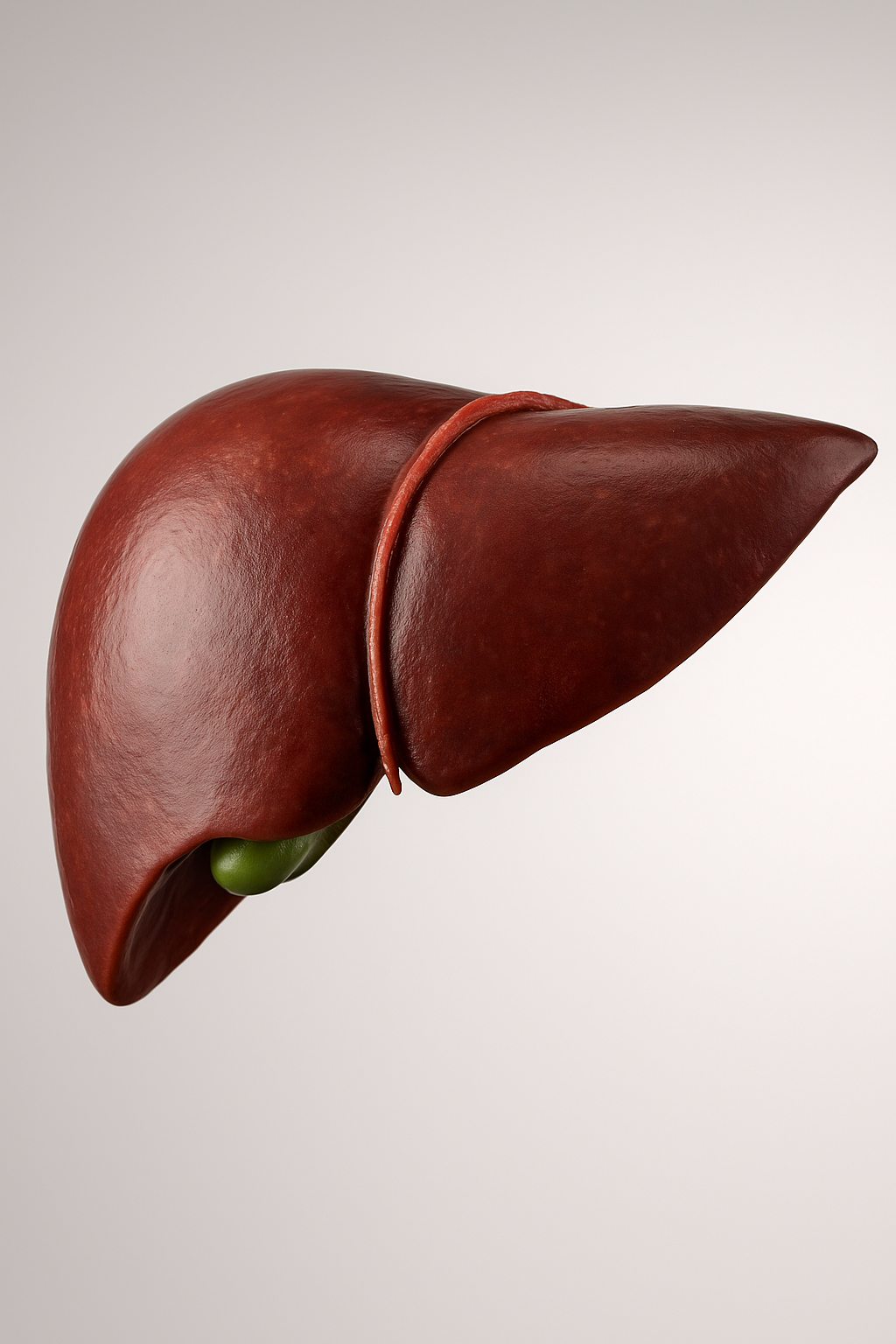
The liver is the largest solid organ in the human body and weighs approximately 1,400–1,700 grams. Its color ranges from reddish to brown, and the gallbladder is located on its surface. Anatomically, it has two principal lobes that are not symmetrical.
The liver has two types of secretory functions: exocrine (external secretion) and endocrine (internal secretion). Its exocrine secretion, bile, supports fat digestion and helps the body eliminate waste products. Through its endocrine functions, it releases many proteins and chemical substances into the bloodstream.
Blood Supply of the Liver
The source describes the liver as the only organ with a dual blood supply, receiving blood from two different sources:
- Hepatic artery: Carries oxygen-rich blood to the liver from the aorta originating from the left ventricle of the heart.
- Portal vein: Carries nutrient-rich but relatively oxygen-poor blood from the stomach, small and large intestines, spleen, and pancreas.
The portal vein allows the liver to process nutrients absorbed by the digestive system. Processed blood then returns to the systemic circulation through the hepatic veins.
Regenerative Capacity of the Liver
The liver has a remarkable ability to regenerate. Even when a substantial part is removed, the remaining liver cells proliferate so that the organ can regain its former volume. The source states that this process usually takes about three months.
This regenerative capacity makes it possible to transplant a portion of the liver from a living donor into a patient with liver failure.